La fedeltà dei clienti può svolgere un ruolo importante nel successo a lungo termine per i negozi WooCommerce. Sebbene attrarre nuovi acquirenti sia essenziale, la crescita sostenibile spesso deriva dall'incoraggiare i clienti esistenti a tornare, spendere di più e promuovere il tuo marchio. Programmi fedeltà, sistemi di ricompense e strategie di fidelizzazione ben pianificate possono aiutare a trasformare acquirenti occasionali in clienti abituali che si fidano del tuo negozio e si sentono apprezzati dopo ogni acquisto. Nel tempo, queste relazioni possono portare a un valore del cliente più elevato e a entrate più costanti.
In questa guida, esploreremo come i proprietari di negozi WooCommerce possono creare programmi di fidelizzazione efficaci per i clienti senza complicare eccessivamente il loro sito o interrompere l'esperienza di acquisto. Dai punti e premi ai crediti negozio, ai vantaggi esclusivi e alle offerte personalizzate, imparerai strategie pratiche e facili da implementare che possono migliorare la fidelizzazione, rafforzare le relazioni con i clienti e creare un negozio WooCommerce più coinvolgente e redditizio.
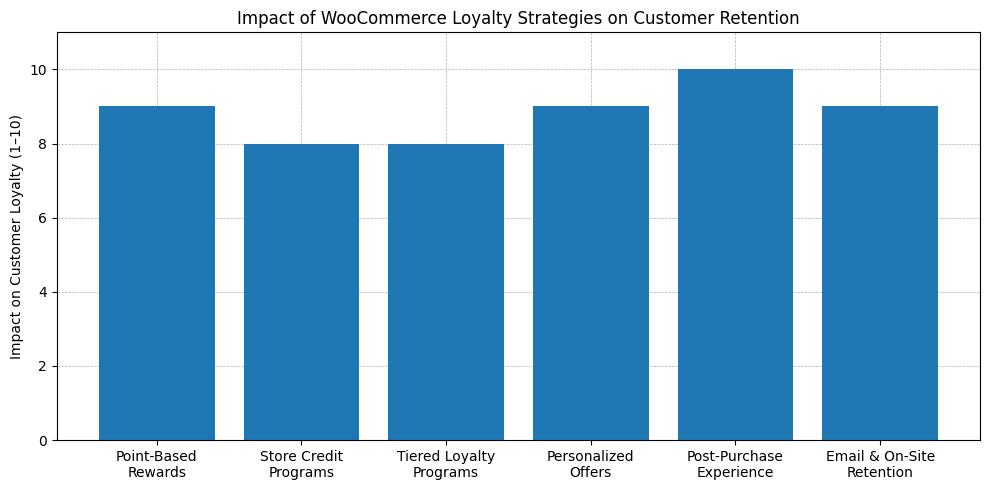
Questo grafico a barre mostra strategie di fidelizzazione comuni e il loro impatto relativo sulla fidelizzazione. L'esperienza post-acquisto, le offerte personalizzate e i messaggi via email generalmente guidano una maggiore fidelizzazione rispetto ai soli punti, sebbene i premi basati su punti contribuiscano quando sono allineati al comportamento del cliente.
La fedeltà del cliente in WooCommerce si riferisce alla preferenza continua di un acquirente per il tuo negozio rispetto ai concorrenti, tipicamente guidata da esperienze positive e coerenti in ogni interazione. Si costruisce attraverso fiducia, affidabilità e valore, non solo sconti. Quando i clienti sanno che riceveranno prodotti di qualità, un checkout agevole e un supporto affidabile, è più probabile che ritornino e costruiscano una relazione a lungo termine con il tuo marchio.
In WooCommerce, la fedeltà si sviluppa nel tempo attraverso strategie di fidelizzazione ponderate che premiano l'interazione e rafforzano la fiducia nel tuo negozio. Dalla facilità di navigazione e dalle politiche trasparenti ai follow-up personalizzati e ai premi significativi, la fedeltà riflette quanto bene il tuo negozio soddisfa le aspettative dei clienti prima, durante e dopo ogni acquisto.
I fattori chiave che influenzano la fedeltà dei clienti includono:
Un negozio WooCommerce incentrato sulla fidelizzazione dà priorità alle relazioni a lungo termine con i clienti rispetto alle transazioni una tantum, promuovendo una crescita più sostenibile e entrate prevedibili.
La fidelizzazione del cliente può svolgere un ruolo significativo nella redditività e nella stabilità a lungo termine dei negozi WooCommerce. La ricerca di settore suggerisce che trattenere i clienti esistenti è spesso più conveniente che acquisirne di nuovi, soprattutto perché i costi pubblicitari continuano ad aumentare. I clienti fedeli si fidano già del tuo marchio, richiedono in genere meno persuasione per convertire e tendono a completare gli acquisti con un attrito minimo. Nel tempo, questo può creare una base di entrate più affidabile che supporta una crescita sostenibile.
Oltre alle vendite ripetute, i clienti fedeli diventano spesso sostenitori del tuo negozio. Lasciano recensioni, condividono raccomandazioni e segnalano amici, estendendo la tua portata senza spese di marketing aggiuntive. Nei mercati WooCommerce competitivi, queste relazioni possono fornire un vantaggio rafforzando la credibilità del marchio e riducendo la dipendenza da promozioni costanti o traffico a pagamento.
Una forte fedeltà dei clienti può aiutare i negozi WooCommerce:
Prioritizzando la fedeltà del cliente, i proprietari di negozi WooCommerce possono costruire resilienza, migliorare i margini e crescere in modo più costante anche in mercati affollati o sensibili ai prezzi.
I programmi fedeltà di WooCommerce sono sistemi strutturati progettati per premiare i clienti per azioni significative, come effettuare acquisti, creare account o interagire con il tuo brand nel tempo. Questi programmi incoraggiano comportamenti ripetuti dando agli acquirenti un chiaro incentivo a tornare, aiutando a trasformare acquirenti occasionali in clienti a lungo termine. In WooCommerce, i programmi fedeltà sono comunemente alimentati da plugin che tracciano automaticamente le attività, calcolano i premi e gestiscono i riscatti senza aggiungere lavoro manuale per i proprietari del negozio.
Se implementati correttamente, i programmi fedeltà possono migliorare l'esperienza di acquisto anziché complicarla. I clienti dovrebbero capire immediatamente come guadagnano premi e come questi premi li avvantaggiano. Regole chiare, progressi visibili e opzioni di riscatto semplici tendono a mantenere i clienti coinvolti e motivati a continuare ad acquistare dal tuo negozio.
Tipi comuni di programmi fedeltà WooCommerce includono:
I programmi di fidelizzazione WooCommerce più efficaci sono trasparenti, facili da gestire e allineati con gli obiettivi di fidelizzazione a lungo termine del tuo negozio.
I premi basati sui punti sono ampiamente utilizzati in WooCommerce perché sono relativamente facili da capire per i clienti e possono essere motivanti nel tempo. Gli acquirenti guadagnano punti per il completamento di azioni specifiche nel tuo negozio, collegando l'interazione ai premi. Man mano che i punti si accumulano, i clienti possono avvertire un senso di progresso, incoraggiandoli a tornare e continuare a fare acquisti.
Per i proprietari di negozi, i sistemi basati su punti offrono flessibilità e automazione. I plugin di WooCommerce possono tracciare automaticamente i punti, applicare regole di guadagno e consentire ai clienti di riscattare le ricompense senza supervisione manuale. Se spiegata chiaramente, questa strategia può mantenere i clienti coinvolti oltre una singola transazione e rafforzare il comportamento di acquisto ripetuto.
I modi più comuni in cui i clienti guadagnano punti includono:
I vantaggi dei programmi fedeltà basati sui punti includono:
Una comunicazione chiara è essenziale in modo che i clienti comprendano sempre come i punti vengono guadagnati, tracciati e riscattati.
Su centinaia di siti WooCommerce, i sistemi a punti falliscono spesso a causa di una configurazione errata piuttosto che di problemi concettuali. La sfida tecnica più comune è la tempistica del calcolo dei punti. Molti proprietari di negozi impostano i punti per essere assegnati immediatamente al momento dell'ordine, il che crea problemi quando gli ordini vengono annullati o rimborsati.
Configura il tuo plugin punti per assegnare punti solo dopo che gli ordini passano allo stato "completato". Ciò impedisce abusi di punti e riduce la necessità di aggiustamenti manuali. In WooCommerce, puoi impostarlo tipicamente nelle impostazioni del tuo plugin fedeltà sotto "Regole di guadagno punti" o una sezione simile.
Un altro problema frequente: incongruenze nella visualizzazione dei punti tra diversi page builder o temi. Se stai usando Elementor, Divi o temi personalizzati, testa la visualizzazione dei punti nelle pagine prodotto, nel carrello e nelle pagine account prima del lancio. Alcuni plugin memorizzano nella cache i saldi dei punti in modo errato, portando a confusione per i clienti quando i punti visualizzati non corrispondono ai saldi effettivi al momento del checkout.
Anche le prestazioni meritano di essere monitorate. Il calcolo dei punti avviene al momento del checkout e plugin codificati male possono aggiungere 500ms+ ai tempi di caricamento. Esegui test con Query Monitor o strumenti simili per assicurarti che il tuo plugin di fidelizzazione non crei colli di bottiglia nel database su negozi ad alto traffico.
Convertire i punti fedeltà in credito negozio può rendere i premi più tangibili e preziosi per i clienti WooCommerce. A differenza dei sistemi di punti astratti, il credito negozio assomiglia molto al denaro reale, il che può motivare gli acquirenti a riscattare i propri premi prima. Ciò può aumentare gli acquisti ripetuti mantenendo la spesa all'interno del tuo negozio, anziché indirizzare i clienti verso sconti esterni.
Per i proprietari di negozi WooCommerce, i programmi di credito negozio offrono flessibilità e controllo. I crediti possono essere applicati automaticamente al checkout, scadere dopo un certo periodo o essere limitati a prodotti o categorie specifiche. Questo approccio può bilanciare la soddisfazione del cliente con la protezione delle entrate, garantendo che i premi guidino un coinvolgimento significativo piuttosto che riscatti una tantum.
I crediti negozio possono essere utilizzati per:
Se spiegato chiaramente e facile da riscattare, il credito del negozio può diventare uno strumento efficace per la fidelizzazione a lungo termine dei clienti in WooCommerce.
I programmi fedeltà a livelli premiano i clienti in base al loro livello di spesa o coinvolgimento nel tempo. Invece di offrire gli stessi vantaggi a tutti, i negozi WooCommerce creano più livelli attraverso i quali i clienti possono progredire man mano che acquistano più frequentemente o raggiungono traguardi specifici. Questa struttura può incoraggiare l'impegno a lungo termine dando agli acquirenti un chiaro incentivo a rimanere attivi e a salire a livelli di maggior valore.
Per i negozi WooCommerce, i programmi a livelli possono essere particolarmente efficaci perché riconoscono e premiano i tuoi clienti più preziosi. Livelli più alti sbloccano vantaggi più forti, il che può far sentire gli acquirenti fedeli apprezzati e motivati a mantenere il loro status. Se combinati con messaggi chiari e soglie raggiungibili, i programmi a livelli possono aiutare a migliorare la fidelizzazione e il valore medio degli ordini.
Esempi di vantaggi basati su livelli includono:
I programmi fedeltà a livelli spesso funzionano particolarmente bene per i negozi WooCommerce con acquisti ripetuti frequenti, abbonamenti o linee di prodotti di alto valore.
L'impostazione di programmi a livelli in WooCommerce richiede un'attenta pianificazione attorno alla gestione dei ruoli utente e alla logica condizionale. La maggior parte dei plugin di fidelizzazione gestisce automaticamente l'assegnazione dei livelli, ma l'integrazione con contenuti o prezzi riservati ai membri può diventare complessa.
Se stai utilizzando plugin come WooCommerce Memberships insieme al tuo programma fedeltà, assicurati che gli aggiornamenti di livello attivino le modifiche corrette al livello di appartenenza. Ciò richiede in genere la configurazione di un webhook o la scrittura di codice di integrazione personalizzato. Senza una corretta configurazione, i clienti potrebbero raggiungere un nuovo livello ma non ricevere i benefici promessi, il che può danneggiare significativamente la fiducia.
Per i negozi che funzionano su hosting con risorse limitate (condiviso o VPS di base), il calcolo del livello può mettere a dura prova il database quando si verifica l'idoneità dei clienti in base a più criteri. Considera la memorizzazione nella cache dello stato del livello nei metadati dell'utente anziché ricalcolarlo ad ogni caricamento della pagina. Questo è particolarmente importante se visualizzi badge o vantaggi di livello nelle pagine dei prodotti o nella dashboard dell'account.
La personalizzazione può svolgere un ruolo significativo nella costruzione di una forte fedeltà dei clienti per i negozi WooCommerce. Quando gli acquirenti si sentono riconosciuti come individui piuttosto che come acquirenti anonimi, è più probabile che tornino e interagiscano con il tuo marchio. Le esperienze personalizzate possono dimostrare ai clienti che il tuo negozio comprende le loro esigenze, preferenze e comportamenti di acquisto, il che aiuta a costruire fiducia e relazioni a lungo termine.
In WooCommerce, la personalizzazione non richiede sistemi complessi o costosi. Anche piccoli aggiustamenti mirati possono migliorare la fidelizzazione e gli acquisti ripetuti. Utilizzando dati dei clienti come cronologia acquisti, comportamento di navigazione o livelli di coinvolgimento, i proprietari dei negozi possono offrire offerte e comunicazioni più pertinenti che sembrano tempestive e preziose.
Le strategie di personalizzazione semplici includono:
Se applicata in modo coerente, la personalizzazione può aiutare i negozi WooCommerce a creare esperienze significative che incoraggiano i clienti a tornare.
La fedeltà dei clienti non si costruisce solo sui premi. Sebbene punti e sconti giochino un ruolo, la fidelizzazione a lungo termine dipende fortemente dall'esperienza complessiva che i clienti hanno prima, durante e dopo ogni acquisto. Un checkout agevole, una comunicazione chiara e un'evasione affidabile aiutano a costruire fiducia, ridurre l'attrito e dare ai clienti la sicurezza di tornare senza bisogno di incentivi costanti.
Le strategie di forte fidelizzazione si concentrano su coerenza e supporto. Quando i clienti si sentono informati e assistiti dopo l'acquisto, possono sviluppare un legame emotivo con il tuo brand. Queste esperienze possono rafforzare la fedeltà rendendo il tuo negozio WooCommerce affidabile, professionale e facile con cui fare affari nel tempo.
Oltre ai punti di contatto post-acquisto, la comunicazione continua mantiene il tuo negozio in primo piano. Messaggi discreti sul sito e email ben programmate possono incoraggiare visite ripetute senza sopraffare gli utenti. Se fatte correttamente, queste tattiche possono supportare la fidelizzazione in modo naturale e rafforzare le relazioni a lungo termine con i clienti.
Queste strategie integrano i programmi fedeltà e possono aiutare a mantenere la fedeltà dei clienti anche quando gli sconti non sono il principale motivatore.
Misurare la fedeltà dei clienti aiuta i proprietari di negozi WooCommerce a determinare se le loro strategie di fidelizzazione stanno funzionando. La fedeltà non riguarda solo la frequenza con cui i clienti acquistano, ma il valore che generano nel tempo e la costanza con cui scelgono il tuo negozio rispetto ai concorrenti. Rivedendo regolarmente le metriche chiave, puoi identificare tendenze, individuare punti deboli e migliorare l'esperienza complessiva del cliente.
WooCommerce fornisce analisi integrate e molti plugin di fidelizzazione o marketing offrono approfondimenti sul comportamento dei clienti. Monitorare i dati giusti ti aiuta a perfezionare i premi, personalizzare i messaggi e ottimizzare i tuoi programmi di fidelizzazione per una crescita a lungo termine piuttosto che per guadagni a breve termine.
Queste metriche dovrebbero essere esaminate insieme, non isolatamente. Una visione equilibrata aiuta a garantire che i tuoi sforzi di fidelizzazione incoraggino acquisti ripetuti mantenendo un'esperienza di acquisto fluida e redditizia.
Dall'esperienza con negozi clienti di varie dimensioni, abbiamo scoperto che le metriche grezze possono essere fuorvianti senza contesto. Un tasso di riacquisto del 25% potrebbe sembrare basso, ma per i negozi che vendono articoli costosi e acquistati raramente (mobili, elettrodomestici), questo può effettivamente indicare una forte fedeltà. Confronta le tue metriche con la tua specifica categoria di prodotti, non con i benchmark generici dell'e-commerce.
Attenzione al divario tra punti guadagnati e punti riscattati. Se i clienti accumulano punti ma li riscattano raramente, i tuoi premi non sono abbastanza allettanti o il processo di riscatto è troppo semplice. Nei siti dei nostri clienti, abbiamo scoperto che tassi di riscatto inferiori al 40% annuo solitamente segnalano problemi di progettazione del programma piuttosto che disinteresse dei clienti.
I calcoli del valore del ciclo di vita del cliente in WooCommerce possono anche essere complicati se non si tiene conto correttamente di resi e rimborsi. Molti plugin di analisi calcolano il CLV utilizzando i totali lordi degli ordini, gonfiando i tuoi numeri. Utilizza le entrate nette (al netto dei rimborsi) per una pianificazione a lungo termine più accurata.
I programmi fedeltà di WooCommerce di successo sono progettati per supportare il percorso del cliente, non per complicarlo. I premi dovrebbero sembrare intuitivi e di valore, con spiegazioni chiare su come i clienti li guadagnano e li riscattano. Quando le funzionalità di fidelizzazione si integrano perfettamente nell'esperienza di acquisto, è più probabile che i clienti partecipino e rimangano coinvolti nel tempo.
Prestazioni e usabilità sono importanti quanto gli incentivi. Un programma fedeltà ben costruito dovrebbe caricarsi rapidamente, funzionare senza problemi sui dispositivi mobili e non interrompere mai il flusso di checkout. Testare regolarmente il tuo programma aiuta a garantire che i premi incentivino gli acquisti senza causare confusione, attrito o carrelli abbandonati.
Prioritizzando chiarezza, velocità e coerenza, i programmi fedeltà di WooCommerce possono sembrare un vero vantaggio anziché un passaggio aggiuntivo. Quando i clienti vedono chiaramente il valore, la partecipazione e la fidelizzazione a lungo termine tendono a migliorare.
Anche i programmi fedeltà ben intenzionati possono fallire se creano confusione o attrito per i clienti. Molti proprietari di negozi WooCommerce aggiungono troppe regole, condizioni o restrizioni, il che può far sembrare i premi difficili da guadagnare o non degni dello sforzo. Quando i clienti non riescono a capire facilmente come funziona un programma, la partecipazione spesso diminuisce e la fiducia può risentirne.
Un altro problema comune è trattare i programmi fedeltà come una funzionalità "imposta e dimentica". Senza un monitoraggio, test e promozione regolari, i programmi di ricompensa possono perdere visibilità e rilevanza. Strategie di fidelizzazione di successo si evolvono con il comportamento dei clienti, l'uso dei dispositivi e i modelli di acquisto per rimanere efficaci nel tempo.
Evitare questi errori aiuta a garantire che il tuo programma fedeltà WooCommerce rimanga chiaro, motivante e redditizio, rafforzando al contempo le relazioni a lungo termine con i clienti.
Non tutti i negozi WooCommerce beneficiano di un programma fedeltà formale. Se vendi prodotti altamente specializzati con cicli di acquisto molto infrequenti, pensa a mobili su misura, abiti da sposa o grandi elettrodomestici, la complessità di mantenere un sistema a punti potrebbe superare il suo valore. I clienti che acquistano una volta ogni cinque anni non sono motivati dall'accumulo di punti.
Allo stesso modo, se il tuo negozio opera già con margini minimi, gli sconti fedeltà possono erodere rapidamente la redditività. Abbiamo visto negozi in cui il 20% dei clienti ha riscattato punti, riducendo di fatto i margini al di sotto del pareggio sugli acquisti ripetuti. In questi casi, concentrarsi su un servizio eccezionale e su un marketing strategico via email spesso offre una migliore fidelizzazione senza pressioni sui margini.
Negozi con basi di clienti molto piccole (meno di 200 clienti attivi all'anno) potrebbero anche scoprire che i programmi fedeltà creano più overhead amministrativo di quanto offrano in termini di valore. I costi del plugin, il tempo di configurazione e la gestione continua hanno spesso più senso una volta che si dispone di un volume di acquisti sufficiente a giustificare l'automazione.
I plugin per punti e premi consentono ai proprietari di negozi WooCommerce di incoraggiare acquisti ripetuti assegnando ai clienti punti per azioni specifiche, come effettuare ordini o lasciare recensioni. I punti possono essere riscattati per sconti o vantaggi.
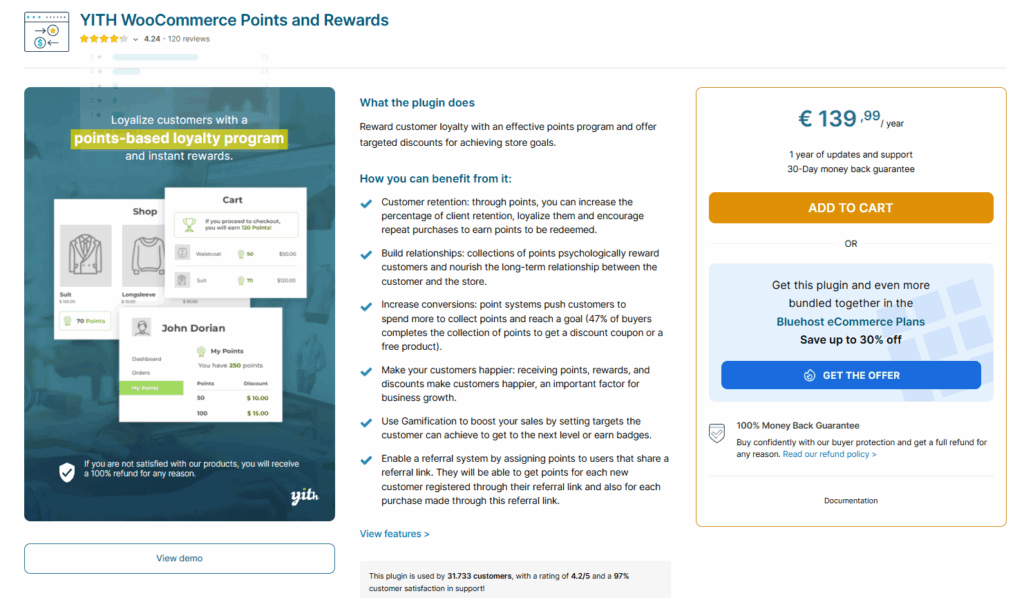
Offre un controllo granulare sui tassi di conversione e sulle regole di scadenza per prevenire responsabilità indefinite sui punti. Se gestisci promozioni che influenzano il valore dei punti, testa attentamente l'interazione.
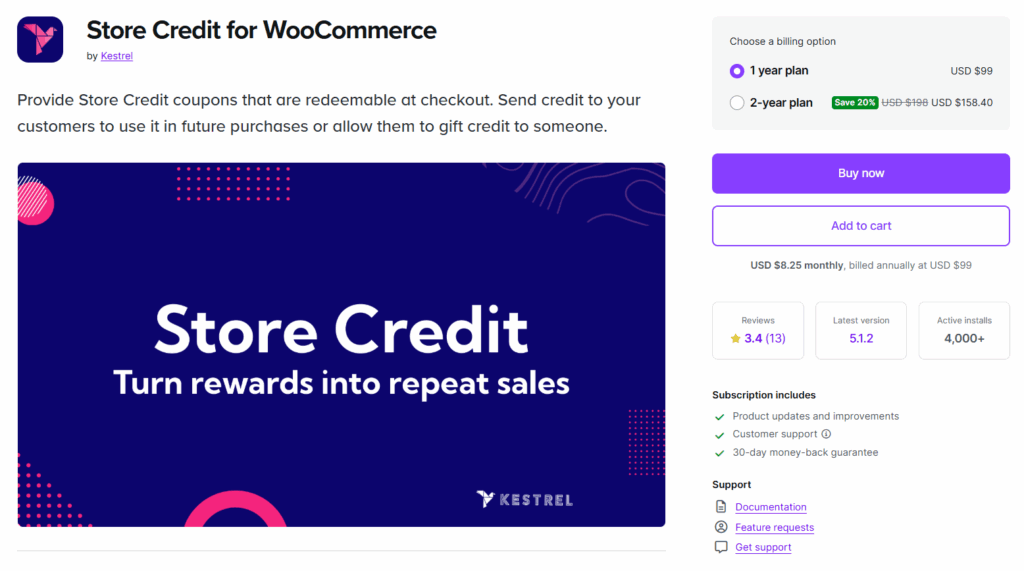
I crediti dello store funzionano esattamente come denaro contante, cosa che i clienti trovano più prezioso dei punti. Gestisce la contabilità in modo pulito, inclusa la conversione dei rimborsi in crediti, il che aiuta sia la fidelizzazione che il flusso di cassa.
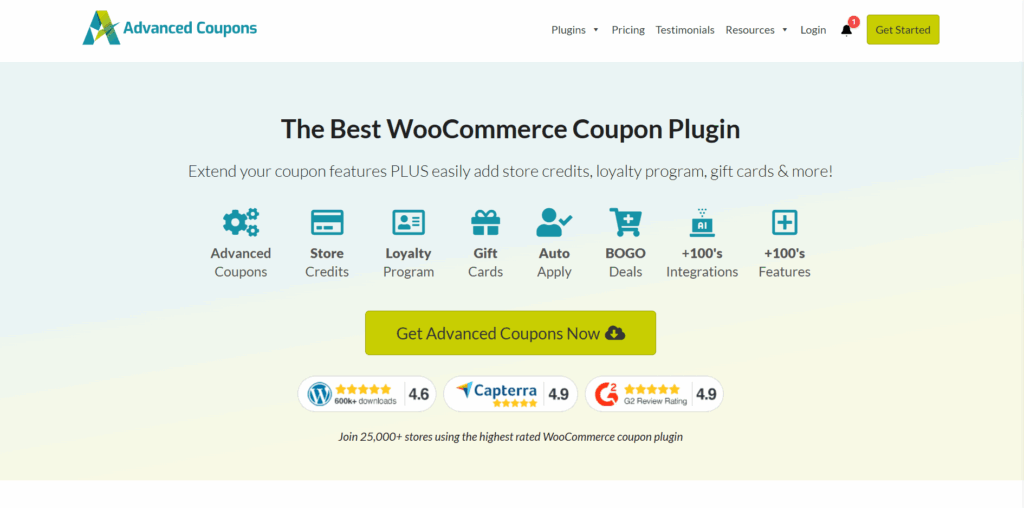
Integra la fedeltà con il sistema di coupon di WooCommerce. La funzionalità di applicazione automatica rimuove gli attriti, anche se può influire sul comportamento di sovrapposizione dei coupon quando si eseguono più promozioni.
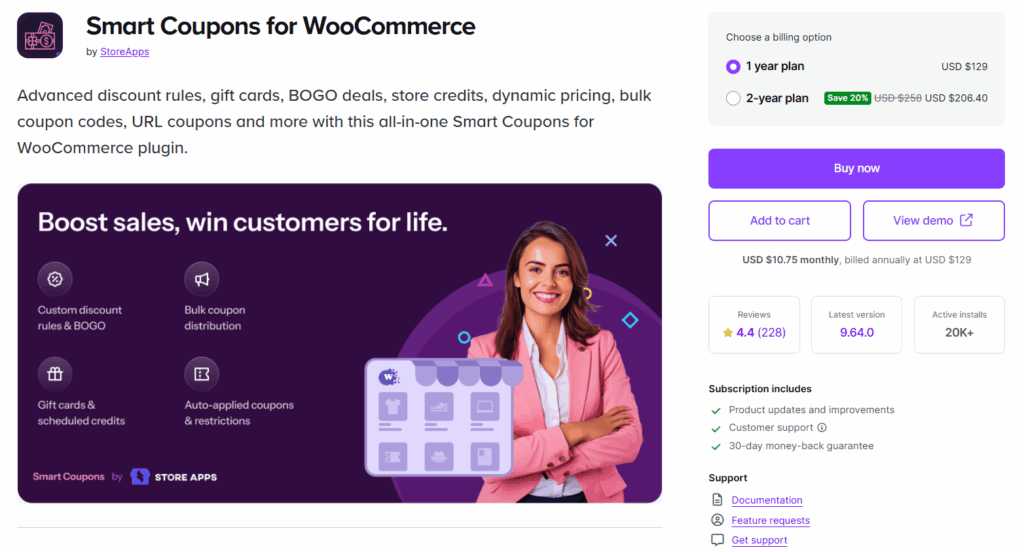
Automatizza la consegna di coupon e offerte personalizzate per i clienti abituali.
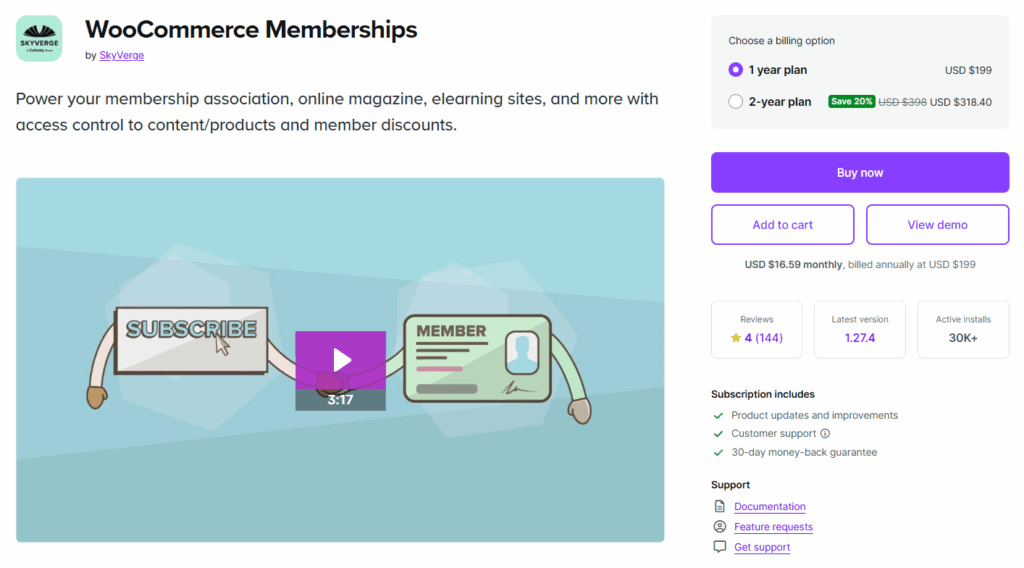
Funziona bene quando si hanno chiari differenziali di valore: prodotti esclusivi, accesso anticipato o prezzi preferenziali. La gestione della struttura dei permessi diventa complessa man mano che il catalogo cresce.
Costruire la fedeltà dei clienti in WooCommerce implica più di semplici sconti. Punti, premi e programmi di fidelizzazione possono aiutare a creare relazioni significative che guidano acquisti ripetuti e crescita sostenibile. Se combinati con una forte esperienza utente, personalizzazione e comunicazione chiara, i programmi fedeltà possono diventare una risorsa preziosa per molti negozi WooCommerce.
L'approccio più efficace inizia solitamente in piccolo, implementa un semplice sistema a punti o un programma di credito in negozio, monitora le risposte dei clienti e si adatta in base al comportamento effettivo anziché alle supposizioni. Testa le soglie di ricompensa, traccia i tassi di riscatto e assicurati che il tuo programma migliori, non complichi, l'esperienza di acquisto.
Se stai lavorando con uno sviluppatore o un'agenzia per implementare funzionalità di fidelizzazione, assicurati che comprendano Prestazioni di WooCommerce considerazioni e può integrare sistemi di fidelizzazione senza influire sui tempi di caricamento o sul flusso di checkout. Una corretta implementazione tecnica è importante quanto la progettazione del programma.
Aree chiave da verificare durante l'implementazione:
Per i negozi che gestiscono complesse implementazioni di fidelizzazione su più siti o linee di prodotti, lavorare con specialisti che comprendono sia la piattaforma WooCommerce che la strategia di fidelizzazione può aiutare a evitare insidie comuni. L'esperienza con implementazioni reali, non solo con l'installazione di plugin, fa spesso la differenza tra un programma fedeltà che genera coinvolgimento e uno che crea ticket di supporto.
Se stai valutando agenzie o sviluppatori per lavori su programmi fedeltà, chiedi informazioni sul loro approccio ai test delle prestazioni, sulla loro esperienza con casi limite nei calcoli dei punti (cancellazioni, rimborsi parziali, rinnovi di abbonamenti) e su come gestiscono i flussi di lavoro per l'aggiornamento dei livelli. Questi dettagli tecnici rivelano se hanno effettivamente gestito programmi fedeltà in produzione su larga scala.
"*" indica i campi obbligatori
"*" indica i campi obbligatori
"*" indica i campi obbligatori


